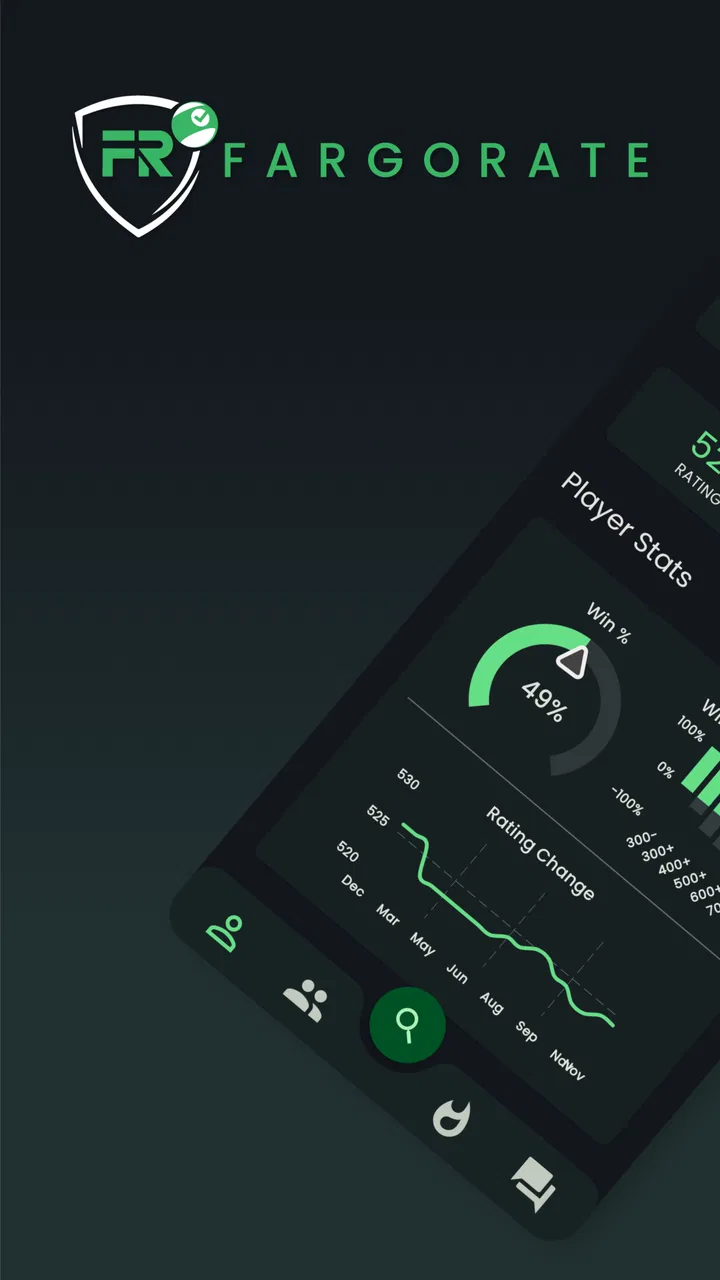
FargoRate Player
- 3.5
- Rating
- 100.00K
- Installs
- Free
- Price

 Analysis by App-foxy
If you play pool seriously enough to care about how your results are measured, FargoRate Player is worth a closer look. I found it most useful as a focused sports app for connecting a player with the FargoRate system, rather than as a general pool companion filled with lessons, drills, live broadcasts, or entertainment features. That narrow purpose is also the key to deciding whether it belongs on your phone.
My recommendation depends on one question: do you need a practical way to view and use your FargoRate player identity, or are you simply looking for help improving your stroke? If it is the first, this app has a clear role. If it is the second, a training app, video library, or coach will probably give you more value.
What I looked for before recommending it
When I assess a rating-focused sports app, I do not judge it by the same standards as a game or a full training platform. The important things are whether it gets me to the relevant information quickly, whether the information feels useful outside the app, and whether it helps me make better decisions about matches, events, and practice.
You May Also Like

 Blood Strike: 2.5 Anniversary
Blood Strike’s Loadouts Turn Every Drop Into a Tactical Gamble
A close look at Blood Strike’s custom loadouts: how fast access to signature weapons reshapes its battle royale rhythm, rewards preparation, and narrows the gap between fights.

 Pandora - Music & Podcasts
Pandora’s Music Is Easy to Start, but Harder to Recover
Pandora’s strength is its low-effort path from a seed to a station. Its weak spot is how much confidence it asks you to place in connection, setup, and quiet recovery.

 8 Ball Pool
 Is Built on Rivalries, Rematches, and Routine
A close look at the rivalries, rematches, shared routines, and unanswered safety questions that turn a quick pool match into a persistent mobile community.

 Samsung Music
’s Quiet Strength Is Playing What You Already Own
Its reach comes less from spectacle than from dependable access to a personal library. That simplicity is both the app’s strongest retention engine and its ceiling.

 AccuWeather: Weather Radar
AccuWeather Review: A Quick, Clear Forecast for Everyday Decisions
For everyday plans, the best forecast is the one you can understand quickly. AccuWeather makes rain timing, radar, and local conditions easy to act on, with a few trade-offs.

 Hill Climb Racing
Why Hill Climb Racing Still Turns Crashes Into One More Run
A tiny car, a bumpy hill and one more upgrade: Hill Climb Racing keeps resurfacing because its simple chaos makes every near-miss feel personal.
More From Our News Desk
View All News


That is the lens I used here. FargoRate Player is published by FargoRate and sits in the sports category. It is free to install, carries an Everyone content rating, and supports Android devices starting with version 5.0. The current release is version 2.8.7, so it is aimed at a broad range of Android phones rather than only recent hardware.
The app has reached over 100 thousand installs, while its average rating is 3.5 from more than 300 ratings. I read that combination as a useful warning to keep expectations realistic: there is enough adoption for the app to have a genuine place in the pool community, but the experience may not feel equally polished or essential to every player.
There are also optional in-app purchases ranging from $1.99 to $12.99 per item. That makes the initial decision easy because I can try the free app first, but I would still pay attention to which tools I actually use before buying anything. A rating app should earn its place in my routine through repeated usefulness, not through the promise of having more information on screen.
The first decision: what do you want the app to replace?
For me, the biggest mistake would be comparing this directly with a pool training app. FargoRate Player is better understood as a player-facing utility. It belongs beside a scorekeeping habit, tournament routine, or team workflow, not necessarily in place of a practice plan.
If I want stroke drills, position-play exercises, instructional videos, or a structured improvement program, I would choose another category. If I want a central place to interact with my FargoRate profile and use that information when pool results matter, this is the more relevant choice.
That distinction also affects how often I expect to open it. A training app can be useful every day because it gives me something to practise. A rating app may be most valuable before an event, after matches have been recorded, or when I need to check the context around my competitive level. It does not need to be entertaining to be worthwhile, but it does need to be quick and dependable when I have a specific reason to open it.
How I would use it in a normal pool week
Imagine I am preparing for a local tournament on a Friday evening. I have played enough recently to know that my confidence is not always a reliable guide. Instead of describing my level vaguely to another player, I can use the FargoRate connection as a more useful reference point when discussing the event and my expectations.
After the tournament, I would check the app again rather than relying only on memory. The practical benefit is not just seeing a number; it is having a consistent reference for conversations about competition, matchups, and progress. That can help me notice whether a disappointing night was an isolated result or part of a longer pattern.
A second scenario is team selection. If a captain is trying to balance a lineup, a recognized rating system is more useful than choosing only by reputation. The app does not magically make that decision for the captain, but it can give the player a more concrete identity within the system. I would still discuss recent form, discipline, and the format being played, because a rating should inform a decision rather than replace judgment.
A third use is simply settling confusion. Pool players often compare levels using different local standards, and those conversations can become imprecise quickly. Having a FargoRate-based reference gives the discussion a shared starting point. That is a subtle strength: the app can be valuable even when I am not actively studying statistics, because it makes competitive conversations less dependent on hearsay.
Where the focused approach works well
The strongest part of FargoRate Player is its specialization. It does not ask me to sort through unrelated sports content before reaching the pool information I care about. For a player already involved in the FargoRate ecosystem, that focus can be more useful than a broad sports app that offers a little of everything but has no meaningful connection to my competitive identity.
I also like the idea of using a dedicated player app instead of keeping scattered notes, screenshots, or messages about my rating. Those workarounds are easy to lose and difficult to keep current. A purpose-built app gives the information a proper home and makes it easier to build a repeatable habit around checking it.
The real advantage is consistency, not spectacle. If I use the app as a reference before and after meaningful competition, it can help me think more clearly about my pool activity. That is a quieter benefit than a flashy training feature, but it is the reason I would recommend trying it to an active FargoRate player.
Three practical habits that make it more useful
First, I would avoid checking the app only when I am pleased with a result. That creates a distorted picture of progress. A better habit is to look at it at regular competitive milestones, including ordinary league nights and disappointing matches. The goal is to build context, not to use the app as a reward screen.
Second, I would record my own notes separately after important sessions. The app can serve as the rating reference, while my notes capture details it cannot replace: whether I struggled with safety play, rushed decisions, or pressure. This combination is more useful than expecting a rating alone to explain why a match went well or badly.
Third, I would use the app before making claims about my level to a new league or tournament group. That does not mean treating the rating as a complete description of my game. It simply gives me a clearer starting point and helps avoid the awkwardness of arguing from memory.
These habits reveal an important trade-off. The app becomes more valuable when I bring a little discipline to the way I use it. Someone who opens it once, sees a rating, and expects a complete performance analysis may find it underwhelming. Someone who treats it as one dependable piece of a competitive routine is more likely to appreciate it.
Where other options may fit better
When I compare pool apps, I start with the job I need done rather than trying to find one tool that covers everything. A training guide, scorekeeper, or local community platform can be the better everyday choice if that is where my time goes. I’ll look at the situations where those alternatives solve a more immediate problem, so you can decide whether a rating-focused companion deserves a place in your routine.
Choose a training app when improvement is the main goal
If my priority is becoming a better player, FargoRate Player should not be my only tool. A training-focused alternative may offer drills, repeatable practice sessions, technique guidance, or progress tracking that a player-rating utility is not designed to provide. I would choose that category when I need instructions for what to practise tonight.
The difference is especially important for newer players. A beginner may gain more from learning stance, cue control, aiming, and safety fundamentals than from checking a competitive rating. The rating can become more meaningful as the player gains match experience. Starting with the wrong type of app could make pool feel more complicated instead of more approachable.
Choose a scorekeeping tool when match recording is the priority
Some players mainly want to track racks, sets, innings, or personal results during a session. If that is my need, I would first look at a scorekeeping or match-log alternative. FargoRate Player may be relevant to the broader competitive picture, but a dedicated scoring workflow can be faster at the table, especially when I am trying to keep the match moving.
This is one of the most important category comparisons because players often confuse recording a match with understanding a rating. They are related, but they are not the same task. I would not choose a rating-focused app expecting it to replace every function of a score sheet or tournament desk.
Choose a community or event app when discovery matters most
If I am trying to find local games, communicate with players, discover venues, or follow event activity, a pool community app or organizer-managed platform may be a better fit. FargoRate Player makes more sense once I already have a reason to care about my player profile within the FargoRate system.
That does not make the app weak; it makes it specialized. I would recommend it to the player who says, “I already compete, and I want my FargoRate information in a practical place.” I would not recommend it as the first download to someone who says, “I want to find people to play with.”
What may cause friction
The narrow purpose can feel limiting if I expect a complete dashboard for every part of pool life. A player who wants coaching, social discovery, detailed personal analytics, and live event tools in one package may find themselves switching between several apps anyway.
The rating itself can also be misunderstood. It is tempting to treat one figure as a verdict on current ability, but match conditions, opponent strength, recent activity, nerves, and format all affect how a player performs. I would use the app to support conversations and decisions, not to label myself permanently.
The 3.5 average rating also tells me to approach the experience with practical expectations rather than assuming it will be perfect for every phone and workflow. I would install it and test the actions that matter to me immediately: finding my player information, checking the details I care about, and deciding whether the navigation fits naturally into my tournament routine.
The cost of changing your routine
Switching to FargoRate Player is not mainly a financial decision. The download is free, and the optional purchases are modest enough that I would not commit to them before understanding the basic experience. The larger cost is changing how I keep track of my pool activity.
If I currently rely on messages, paper notes, or memory, the app may simplify one part of the process. However, it will not automatically organize every detail of my development. I would still need a personal method for recording practice goals, match observations, and technical weaknesses.
That is why I would give it a short trial period tied to real use rather than judging it after a casual launch. I would use it around an actual league night or tournament, see whether it answers the questions I normally have, and then decide whether optional purchases add anything meaningful. If I rarely compete or never discuss ratings, there may be no reason to force the app into my routine.
For a captain or organized player, the switching cost may be lower because the FargoRate reference already has a clear purpose. For a recreational player who plays only occasional friendly games, the benefit may be too small to justify another sports app. The same feature can be valuable in one pool environment and unnecessary in another.
Who should install it?
I would start with players who compete in settings where FargoRate matters, players who want a consistent reference when discussing their level, and team members who need a more organized way to think about competitive placement. It is also a sensible companion for someone who already keeps separate practice notes and wants a recognized rating reference alongside them.
I would be more cautious for a beginner, a purely casual player, or anyone looking for instruction. Those users may understand pool faster with a coaching resource, a simple score tracker, or an active local community. A rating-centered app can answer an important question, but it is not necessarily the first question every player needs answered.
My recommendation after weighing the alternatives
I see FargoRate Player as a useful specialist rather than an all-purpose pool app. Its best quality is that it gives an active player a direct, repeatable way to engage with the FargoRate side of competition. Its main limitation is equally clear: the more I want from an app beyond that role, the more likely I am to need another tool.
I would install the free version if I already play in FargoRate-related leagues, tournaments, or team environments. I would use it as a reference before and after competition, pair it with personal notes, and delay any optional purchase until I had identified a feature I genuinely use. That approach keeps the app practical instead of turning it into another source of digital clutter.
For someone asking me whether it will improve their stroke, my honest answer is no—not by itself. For someone asking whether it can help them keep a clearer connection to their competitive pool identity, my answer is yes, with reasonable expectations. The app is not trying to be a coach or a social network, and I think it is better judged on how well it serves that focused purpose.
Overall, I recommend FargoRate Player to active pool players who value a recognized rating reference and want a dedicated mobile companion. I would skip it for now if my main goal is lessons, drills, match scoring, or finding opponents. In the right setting, its simplicity is a strength; outside that setting, it may feel too narrow to justify regular use.
FAQs for FargoRate Player
01What is FargoRate Player, and who is it designed for?
FargoRate Player is a companion app for pool players who want to view and manage information connected with the FargoRate rating system. It is mainly useful for players participating in organized pool, leagues, tournaments, or events where FargoRate ratings are used. The app can help users check their player profile, review rating-related information, and stay connected with competitive activity, although the exact features available may depend on account access and event participation.
02Do I need a FargoRate account to use the FargoRate Player app?
Some parts of FargoRate Player may be accessible without extensive setup, but the most useful player-specific functions generally require an account or an identifiable FargoRate profile. Before downloading, users should be prepared to sign in or create an account if prompted. Your available information may also depend on whether your results have been submitted by an approved league, tournament organizer, or other FargoRate-connected source.
03Can I use FargoRate Player to see my current pool rating and match history?
The app is intended to provide access to player information associated with FargoRate, which may include a current rating, rating details, and recorded match or event history. However, updates are not necessarily instantaneous. Results usually need to be reported and processed first, so a recently completed match may not appear immediately. If information looks incomplete, checking with the event or league organizer may be necessary.
04Does FargoRate Player work for both casual and competitive pool players?
Casual players can download FargoRate Player to explore the system, but its greatest value is for people involved in rated competition. Players who regularly enter leagues, tournaments, or handicapped events can use it to understand their rating and follow results over time. If you only play informal games that are never submitted to FargoRate, the app may offer limited personal value because those matches will not normally affect your profile.
05Is FargoRate Player free, and what should I check before downloading it?
FargoRate Player may be available to download at no initial cost, but users should review the current store listing for any account requirements, optional purchases, or restrictions connected with specific services. It is also worth checking device compatibility, privacy permissions, and whether the app is officially maintained. Because ratings and results depend on submitted data, confirm that your league or tournament uses FargoRate before expecting complete information.
Pros
- Offers detailed player ratings for competitive pool players.
- Helps compare performance against opponents and track progress.
- Useful for finding FargoRate information before entering events.
- Designed around a widely recognized pool-rating system.
- Can support more informed matchmaking and tournament decisions.
Cons
- Most useful features may depend on available FargoRate player data.
- Beginners may find the rating system difficult to understand at first.
- Information can become outdated if results are not updated promptly.
- Limited value for casual players who do not compete in rated events.
- Some functions may require an account or tournament-related access.

FargoRate Player
Gallery